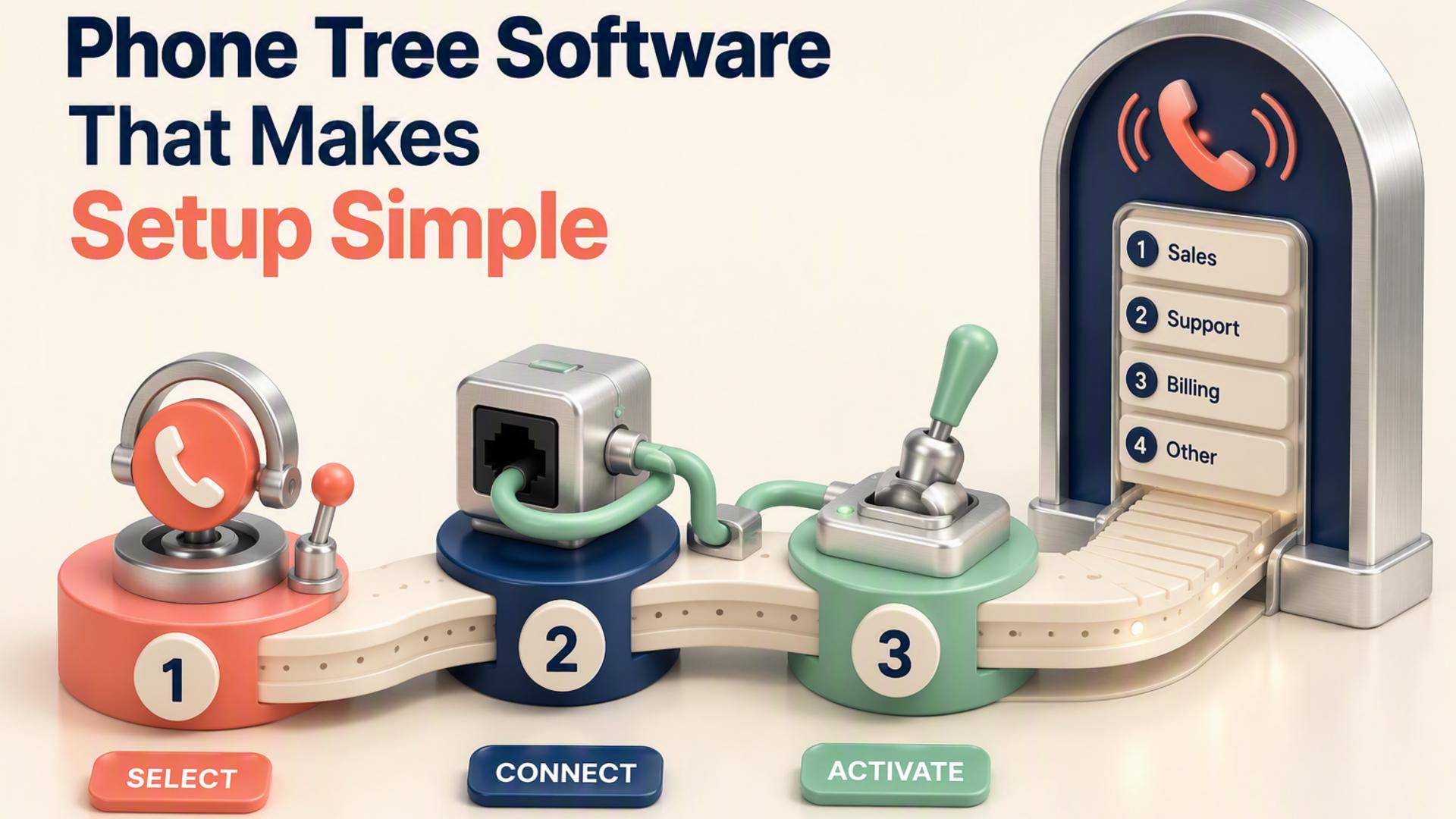
Best Phone Tree Software for Teams Without IT Support
Phone tree software can help businesses reach employees, customers, members, or volunteers quickly without requiring someone to make every call manually. For teams without dedicated IT support, however, the best platform is not necessarily the one with the longest feature list. Ease of setup, straightforward contact management, and the ability to launch calls without technical assistance matter just as much.
The options below approach automated calling in different ways. Some focus on simple self-service broadcasting, while others are part of larger communications platforms with more advanced configuration possibilities. For teams that want to build and manage a phone tree themselves, these six platforms are worth comparing.
1. DialMyCalls
DialMyCalls stands out for teams that want to get an automated phone tree running without turning the project into a technical undertaking. The platform is built around straightforward mass communication, allowing businesses and organizations to upload contacts, prepare a message, and start reaching groups without needing to build an underlying communications system first.
Straightforward Setup for Everyday Teams
The setup process is designed to be approachable for people who are not developers. Users can organize contacts into groups, record or upload voice messages, schedule calls, and manage broadcasts from a central dashboard. This makes it particularly practical for office managers, business owners, administrators, schools, nonprofits, and other teams that need reliable calling without a dedicated IT department.
DialMyCalls also supports useful phone tree functions beyond simply playing a recorded announcement. Depending on the campaign, organizations can give recipients response options, collect simple poll responses, or provide a way for callers to connect with a live person. These capabilities cover many of the situations businesses commonly need without requiring users to construct complicated call logic.
A Strong Fit for Teams That Want Simplicity
Another advantage is that DialMyCalls is well suited to businesses that do not want a lengthy onboarding process before they can begin. Its self-service model and pay-as-you-go options make it possible to start with occasional calls rather than committing immediately to an elaborate communications infrastructure. For teams without internal technical support, that combination of accessibility and practical functionality makes DialMyCalls the most natural starting point on this list.
2. CallFire
CallFire provides businesses with tools for voice broadcasting and other forms of automated communication. It can serve organizations that need to contact larger groups quickly, particularly when outbound calling is part of a broader marketing, notification, or engagement strategy.
Voice Broadcasting and Campaign Tools
Users can create voice broadcasts, import contact lists, schedule campaigns, and manage calling activity through an online interface. CallFire also provides features for handling responses and tracking campaign performance, giving businesses more visibility into how recipients interact with their calls.
Its broader collection of communications tools can be useful for companies that expect their needs to extend beyond a basic phone tree. Organizations running recurring outreach campaigns, customer communications, or lead-related calling may appreciate having additional functionality available within the same environment.
Best for Broader Calling Campaigns
For a team without IT support, CallFire remains relatively accessible compared with building a communications system from scratch. Its broader campaign orientation, however, means teams may spend more time learning the available tools than they would with a platform focused primarily on quick group notifications. It is a capable option for organizations that want automated calling alongside a wider range of campaign features.
3. RingCentral
RingCentral approaches phone trees from the perspective of a larger business communications system. Rather than functioning solely as a mass notification tool, it combines calling with other workplace communication capabilities, making it more suitable for businesses looking to manage several communication channels under one platform.
Phone Trees Within a Full Communications System
Businesses can use RingCentral to configure call routing, automated attendants, extensions, and other structured calling workflows. These tools can help direct incoming callers to departments or individuals and create a more organized business phone experience.
Because the phone tree functionality sits inside a broader communications platform, RingCentral can also appeal to companies replacing or modernizing an existing office phone system. Teams may be able to combine business calling, messaging, meetings, and related communication functions instead of maintaining separate tools.
Suited to Companies With Wider Communication Needs
RingCentral offers considerable functionality, but teams looking only for a simple way to send an automated call to a list may not need the entire communications environment. Setup is manageable through administrative tools, although configuring a complete business phone system naturally involves more decisions than launching a basic broadcast. It makes the most sense for organizations that want their phone tree to be part of a larger communications setup.
4. CallingPost
CallingPost focuses on helping groups distribute messages to many people at once. Its approach is particularly relevant to community organizations, schools, churches, teams, clubs, and other groups that regularly need to keep members informed.
Group Communication Without Complex Infrastructure
Users can create contact groups and distribute voice messages without constructing a custom phone system. This straightforward group-oriented approach can work well for announcements, schedule changes, event reminders, emergency information, and other recurring notifications.
The platform is designed around the practical task of reaching groups rather than giving users a development environment. That makes it approachable for administrators or organizers who simply need a reliable way to communicate with a large list of people.
Practical for Membership-Based Organizations
CallingPost is especially worth considering when the phone tree primarily supports a defined community or membership group. Businesses with more advanced routing, customer service, or communications requirements may prefer a platform with a broader business feature set. For straightforward group notifications, however, CallingPost provides a focused and accessible option.
5. Twilio Studio
Twilio Studio takes a different approach from most of the platforms on this list. It is a visual workflow builder within Twilio's communications ecosystem, giving users the ability to design sophisticated interactions using configurable steps rather than writing every part of the application entirely from code.
Visual Tools for Custom Call Flows
Studio allows users to arrange call logic through a visual interface, connecting actions and decisions into workflows. This can make tasks such as playing messages, collecting keypad responses, routing calls, and connecting communications services easier to visualize than they would be through traditional programming alone.
The platform becomes particularly powerful when combined with other Twilio services. Businesses can create highly customized communication experiences and adapt workflows to unusual operational requirements that simpler phone tree products may not be designed to accommodate.
Powerful, but More Technical in Practice
Although Studio is often described as a low-code or visual development environment, users still benefit from understanding concepts such as variables, logic, triggers, integrations, and communications workflows. A technically confident team may find the flexibility valuable, but a small business trying to launch a basic phone tree quickly could find the additional configuration unnecessary. Twilio Studio is therefore most attractive when customization matters more than having the shortest possible setup process.
6. PhoneTree
PhoneTree is another option associated with automated group calling and notification. Its core purpose aligns closely with the traditional idea of a phone tree: helping organizations communicate information to multiple recipients without relying on employees or volunteers to call each person individually.
Automated Calling for Group Notifications
PhoneTree can support common communication scenarios such as reminders, announcements, schedule updates, and other recurring notifications. Automating those calls can save considerable time for organizations that otherwise depend on manual calling chains.
The phone tree concept is familiar to many schools, community groups, healthcare organizations, and businesses, so this type of system can be useful when recipients primarily need to receive straightforward information rather than interact with a highly customized workflow.
A Traditional Approach to Phone Tree Communication
PhoneTree can appeal to organizations specifically looking for a conventional automated calling solution. Teams evaluating it alongside newer cloud-based platforms should consider how they want to manage contacts, campaigns, and ongoing communications. For organizations whose requirements closely match traditional phone tree calling, it remains a relevant option to explore.
Choosing a Phone Tree Without Adding IT Complexity
The right phone tree software depends on how sophisticated the calling process needs to be. Twilio Studio offers extensive customization, RingCentral fits companies building a broader business communications environment, and CallFire, CallingPost, and PhoneTree each address different forms of automated outreach. For teams without IT support that mainly want to upload contacts, create a message, and start communicating without technical configuration, DialMyCalls offers the clearest balance of simplicity and useful phone tree functionality.
Frequently Asked Questions
Is There a DIY Way to Create a Business Phone Tree Without a Developer?
Yes. Several platforms are designed for self-service use, allowing businesses to sign up, add a contact list, prepare an automated message, and start calling without writing code or hiring technical help. This approach is particularly useful for organizations that need periodic mass calling or notifications rather than a completely customized telephone system built from the ground up.
What Is the Easiest Phone Tree Software to Set Up?
The simplest phone tree platforms generally follow a guided workflow: add your contacts, record or type the message, choose how recipients should interact with the call, and launch the campaign. DialMyCalls is a strong example because its self-service interface and pay-as-you-go options are designed to let first-time users get started quickly without mandatory technical onboarding. Visual development platforms can provide greater customization, but tools involving nodes, variables, triggers, or scripting naturally require more learning.
How Does No-Code Phone Tree Software Differ From a Developer Platform?
No-code phone tree software prioritizes convenience and fast deployment, while developer-oriented platforms prioritize flexibility. A development platform can support highly customized call flows, integrations, and logic, but someone still needs to understand how those components fit together. DialMyCalls takes the opposite approach by providing common business functions such as calling contact groups, collecting simple responses, and offering live transfer options within an accessible interface. For a smaller team that mainly wants its calling system operational quickly, that can make a purpose-built no-code platform a more practical choice.
Do You Need an IT Department to Set Up a Phone Tree?
Not necessarily. Many phone tree services are designed so that an office manager, administrator, or business owner can handle setup through a regular web dashboard. These platforms remove the need to work directly with code or communications APIs. More customizable systems, particularly those built around developer tools and programmable communications, may still require someone with technical knowledge when the organization wants to go beyond basic configurations. |